What Relative Humidity Means and How to Read It
Relative humidity (RH) is expressed as a percentage and represents how much water vapor is in the air relative to the maximum amount the air can hold at a given temperature. At 100% RH, air is fully saturated and condensation forms on surfaces. At 0% RH, air is completely dry — a condition that doesn't naturally occur indoors.
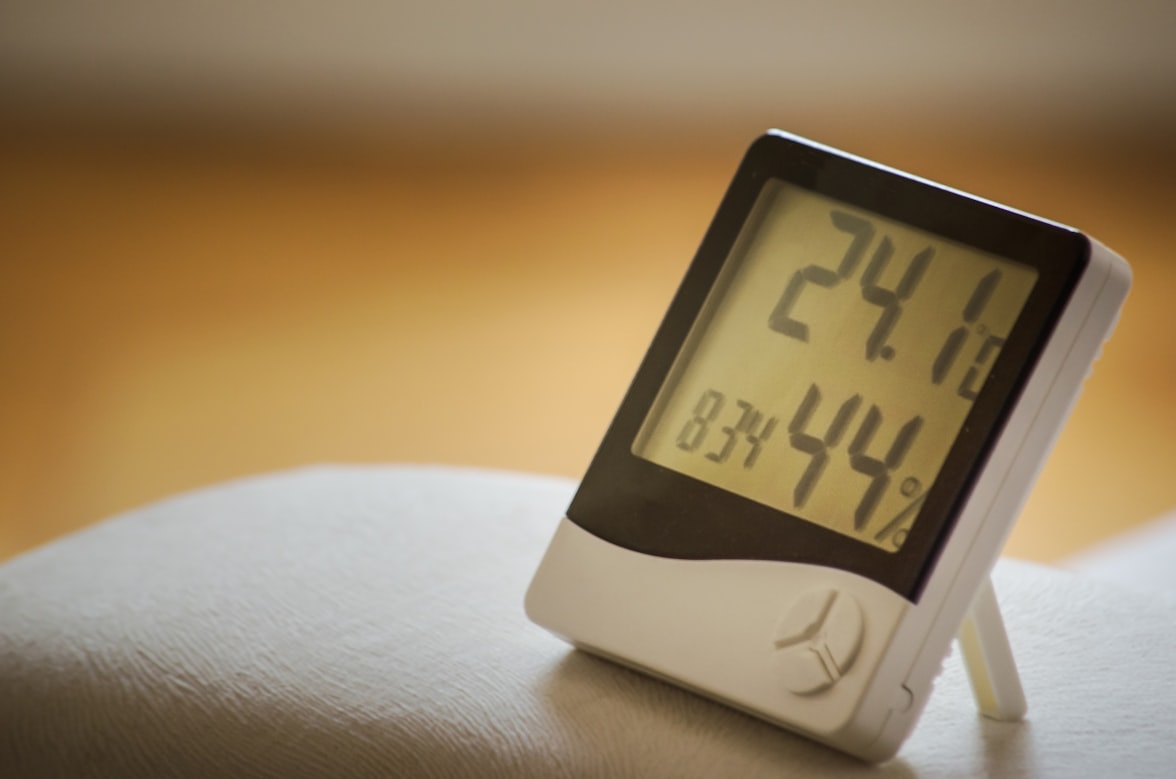
Your hygrometer displays current RH as a percentage alongside the temperature. A reading of 55% RH means the air contains 55% of the maximum water it could hold at that temperature — enough to feel slightly humid on warm days.
What the numbers mean for health and home:
Below 30% RH: Air is too dry. Mucous membranes in the nose, throat, and lungs dry out, reducing their effectiveness as a barrier against viruses and bacteria. Skin dries and cracks. Static electricity increases. Wood furniture, flooring, and musical instruments may crack or warp. This condition is common in apartments with forced-air heat during winter.
30–50% RH: The healthy range recommended by the EPA. Respiratory comfort is optimal. Mold growth is suppressed. Dust mites — a major allergen source — cannot survive in large numbers below 50% RH.
Above 60% RH: Air is too humid. Mold growth accelerates dramatically above 60% RH. Dust mite populations increase. Condensation forms on cool surfaces (windows, exterior walls), which can lead to structural moisture damage and hidden mold. This condition is common in poorly ventilated apartments, ground-floor units, and any apartment during humid summer months.
Interpreting Readings Throughout the Day
Humidity in apartments is not static — it changes significantly throughout the day based on your activities.
Morning: Humidity tends to be highest after overnight breathing in a sealed bedroom. If your bedroom hygrometer consistently shows above 60% RH in the morning, you likely need ventilation or a dehumidifier to prevent long-term mold risk.
After showering: Bathroom humidity spikes to 80–90% RH within minutes of a hot shower. Without an exhaust fan, this moisture migrates to adjacent rooms within 30–60 minutes. Always run the exhaust fan during showers and for at least 15 minutes afterward.
After cooking: Boiling, steaming, and dishwashing all introduce significant moisture. Kitchen RH can temporarily reach 70–80% during cooking. Range hood exhaust fans reduce this, but the effect is temporary — humidity typically normalizes within 20–30 minutes of ventilation.
Seasonal patterns: In most of the US, indoor humidity is lowest in winter (forced-air heat removes moisture) and highest in summer (outdoor air has higher absolute humidity). Most apartment humidity problems are seasonal: dry air in winter, excessive humidity in summer. A single hygrometer placed in the main living area gives you enough information to identify both problems.
Fixing High and Low Humidity Problems
For humidity below 30% (too dry): The most effective solution is a portable humidifier. Ultrasonic cool-mist humidifiers are quiet and energy-efficient. Use distilled or demineralized water to prevent the white mineral dust that tap water humidifiers deposit on furniture. Position the humidifier near your hygrometer but not adjacent to it (the hygrometer will read artificially high near the mist output). Check your hygrometer every few hours when first using a humidifier — overshooting into 60%+ territory creates a mold risk.
For humidity above 60% (too humid): A dehumidifier is the most effective solution. Size it appropriately for your room — a 20-pint unit handles most bedrooms and small apartments. Complement mechanical dehumidification with behavioral changes: run exhaust fans longer after showers and cooking; avoid air-drying laundry indoors if humidity is already elevated; keep bathroom and kitchen doors closed during and after high-moisture activities.
For humidity between 50–60% (borderline): This range warrants monitoring rather than immediate action. If readings are consistently at the high end of this range — especially in summer or in rooms with limited ventilation — preventive dehumidification is worthwhile. Check closets and corners where air circulation is lowest, as these spots can reach higher humidity than open room centers even when your hygrometer reads 55%.
Our Recommendations
Best Humidity & Temperature Monitors
Our ranked selection of digital hygrometers for apartments — from simple single-room displays to Bluetooth multi-room monitoring systems.
Best Dehumidifiers for Apartments
When your hygrometer consistently shows above 60% RH, a dehumidifier is the most effective fix. See our ranked list by room size and capacity.